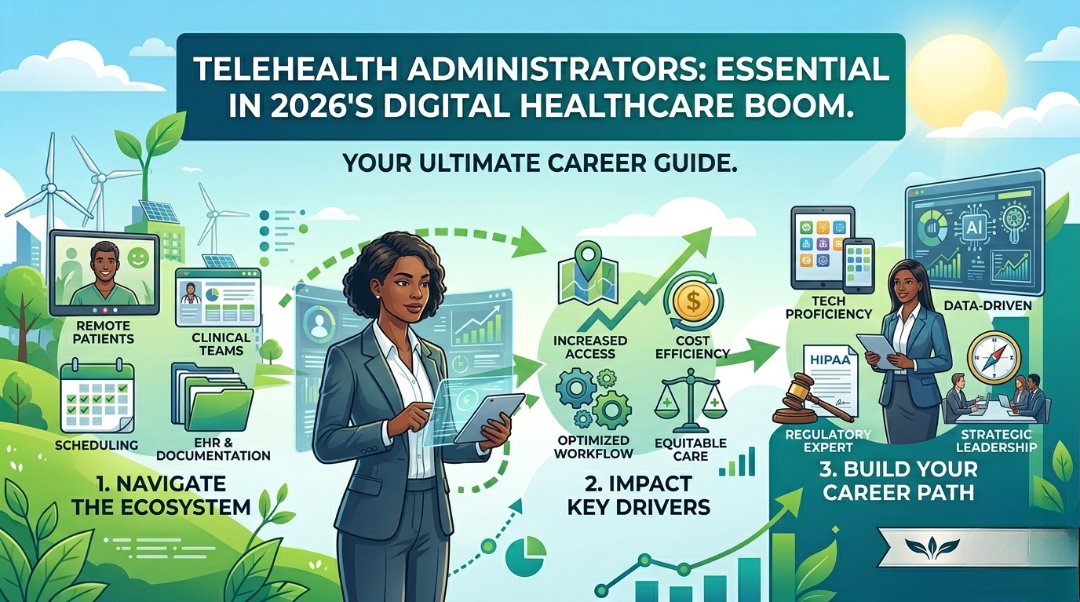
Why Telehealth Administrators Are the New Essential Workers (2026 Guide)
Healthcare is no longer limited to hospitals and clinics. With the rise of virtual consultations, remote monitoring, and AI driven diagnostics, healthcare delivery has moved online.
At the center of this transformation is a powerful new role:
👉 Telehealth Administrator
They ensure that digital healthcare systems run smoothly, efficiently, and securely making them one of the new essential workers in modern healthcare.
Who Is a Telehealth Administrator?
A Telehealth Administrator manages and oversees digital healthcare services. They coordinate between doctors, patients, technology platforms, and healthcare systems to ensure seamless virtual care.
They handle:
- Telemedicine platforms
- Patient scheduling systems
- Electronic health records (EHR)
- Remote monitoring tools
- Compliance and data security
- Operational workflows
They are the backbone of digital healthcare operations.
Why Telehealth Administrators Are Now Essential
1. Healthcare Has Gone Digital
Hospitals and clinics now offer:
- Video consultations
- Online prescriptions
- Virtual follow ups
Someone must manage these systems and that’s the administrator.
2. Rising Demand for Remote Care
Patients prefer:
- Convenience
- Accessibility
- Reduced travel
Telehealth administrators ensure smooth patient experiences.
3. Shortage of Healthcare Professionals
Doctors cannot handle both treatment and tech
operations.
Administrators bridge this gap.
4. Growth of Remote Patient Monitoring
Devices now track:
- Heart rate
- Blood pressure
- Glucose levels
Administrators monitor data flow and alerts.
5. Compliance & Data Security
Healthcare data is sensitive.
Telehealth administrators ensure:
- Privacy
- Secure communication
- Legal compliance
6. Hybrid Healthcare Systems
Hospitals now operate:
- Physical care
- Digital care
Administrators manage this integration.
Key Responsibilities of Telehealth Administrators
1. Managing Telehealth Platforms
- Scheduling appointments
- Coordinating video consultations
- Managing digital prescriptions
2. Patient Onboarding & Support
- Helping patients use apps
- Resolving technical issues
- Guiding virtual consultations
3. Supporting Doctors & Staff
- Preparing patient data
- Managing workflows
- Handling digital records
4. Monitoring Remote Health Data
- Reviewing patient metrics
- Alerting doctors for critical cases
5. Ensuring Compliance
- Data privacy laws
- Healthcare regulations
- Security protocols
6. Optimizing Operations
- Improving efficiency
- Reducing wait times
- Enhancing patient experience
Skills Required for Telehealth Administrators
Technical Skills
- Telemedicine platforms
- EHR systems (Epic, Cerner)
- Basic IT troubleshooting
- Data management
- Healthcare informatics
Healthcare Knowledge
- Medical terminology
- Patient care workflows
- Clinical processes
Soft Skills
- Communication
- Empathy
- Problem solving
- Multitasking
- Organization
Industries Hiring Telehealth Administrators
- Hospitals
- Telemedicine companies
- Digital health startups
- Insurance companies
- Corporate healthcare providers
- Government health programs
- NGOs
Telehealth roles are expanding globally.
Career Roles in Telehealth Administration
1. Telehealth Coordinator
Manages day to day operations.
2. Remote Patient Monitoring Manager
Handles wearable and sensor data.
3. Digital Health Operations Manager
Leads telehealth systems.
4. Clinical Informatics Specialist
Works with health data systems.
5. Telemedicine Program Manager
Designs and scales telehealth services.
Salary of Telehealth Administrators (2026)
India
| Role | Salary Range |
|---|---|
| Telehealth Coordinator | ₹3 – ₹6 LPA |
| Telemedicine Specialist | ₹4 – ₹10 LPA |
| Digital Health Manager | ₹8 – ₹20 LPA |
Global
- USA: $50,000 to $100,000
- UK: £30,000 to £70,000
- Canada: $45,000 to $90,000
Remote opportunities are increasing rapidly.
Why This Role Will Keep Growing
1. AI + Telehealth Integration
AI tools assist in diagnosis and triage.
2. Expansion of Rural Healthcare
Telehealth reaches underserved areas.
3. Aging Population
More remote care needed for elderly patients.
4. Cost Effective Healthcare
Virtual care reduces hospital costs.
5. Government Support
Policies now support telemedicine expansion.
How to Become a Telehealth Administrator
Step 1: Learn Healthcare Basics
- Medical terminology
- Patient care systems
Step 2: Learn Digital Health Tools
- Telemedicine platforms
- EHR systems
Step 3: Get Relevant Education
- Health administration
- Public health
- Health informatics
Step 4: Gain Experience
- Hospitals
- Clinics
- Telehealth startups
Step 5: Learn Data & Compliance
- HIPAA
- Health data privacy laws
Benefits of This Career
✔ High demand
✔ Meaningful work
✔ Remote job opportunities
✔ Growing industry
✔ Good salary growth
✔ No heavy medical degree required
Challenges
❌ Technical issues
❌ Managing multiple patients
❌ Compliance pressure
❌ Continuous learning
Conclusion
Telehealth Administrators have become the new essential workers because they make modern healthcare accessible, efficient, and scalable. As digital healthcare continues to grow, this role will become even more critical.
If you want a career that combines:
- Healthcare
- Technology
- Operations
Then telehealth administration is one of the most promising paths in 2026 and beyond.