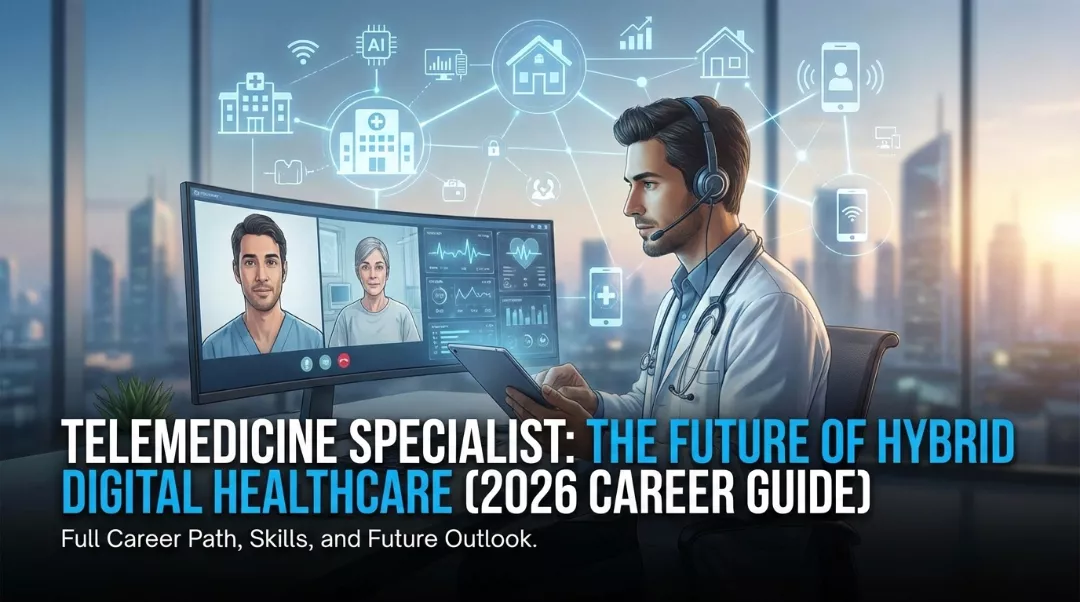
Telemedicine Specialist The Future of Hybrid Digital Healthcare (2026 Career Guide)
Healthcare is undergoing a digital revolution. From video consultations to wearable health devices, AI-powered diagnostics, digital prescriptions, and remote monitoring telemedicine has become a core part of the global healthcare system.
This transformation has created a high growth, future-proof career:
👉 Telemedicine Specialist Professionals who manage, coordinate, and optimize virtual care using digital tools, health apps, telehealth platforms, and patient data systems.
Telemedicine Specialists work at the intersection of healthcare, technology, and communication making it an ideal career for the modern world.
This guide provides a complete overview with roles, responsibilities, skills, salary, tools, roadmap, and future scope.
What Is a Telemedicine Specialist?
A Telemedicine Specialist helps healthcare providers deliver medical care remotely using digital tools such
as:
- Video consultations
- Remote monitoring devices
- Wearable sensors
- AI-powered health checks
- Telehealth software
- Electronic health records (EHR)
- Mobile health apps
They streamline digital health operations, assist
doctors, support patients, and ensure smooth virtual treatment delivery.
They bridge the gap between technology and healthcare service delivery.
Why Telemedicine Careers Are Booming in 2026
1. Post pandemic digital healthcare adoption
Most patients and doctors now prefer online consultations.
2. Rise of wearable health technology
Smartwatches, glucose monitors, heart rate trackers → huge data generation.
3. Shortage of healthcare professionals
Telemedicine fills the gap for rural and remote areas.
4. Hospitals shifting to hybrid models
Physical + digital treatments are becoming the standard.
5. AI diagnostics & digital triage
Telemedicine specialists guide patients through AI based assessments.
6. Cost effective healthcare delivery
Virtual consultation is cheaper and more accessible.
7. Government & insurance support
Telehealth is now accepted, regulated, and
reimbursable.
Telemedicine offers massive growth in India, USA, Europe, Middle East, Africa, and Asia-Pacific.
Roles & Responsibilities of a Telemedicine Specialist
1. Managing Telehealth Platforms
Coordinating:
- Appointments
- Video calls
- Digital prescriptions
- Patient records
2. Assisting Doctors During Virtual Consultations
- Collecting patient data
- Uploading reports
- Handling digital forms
3. Patient Support & Communication
Helping patients with:
- App login
- Device troubleshooting
- Uploading medical records
4. Remote Monitoring of Patient Health
Using data from:
- Wearables
- Vital monitors
- IoT health devices
Monitoring metrics like:
- Heart rate
- ECG
- Blood pressure
- Glucose data
5. Tele triage & Early Diagnosis Support
Using AI tools to:
- Identify critical symptoms
- Recommend next steps
- Prioritize emergencies
6. Training Healthcare Staff in Digital Tools
Conducting workshops on:
- EHR systems
- Telehealth platforms
- Remote monitoring techniques
7. Ensuring Data Privacy & Compliance
Maintaining:
- HIPAA compliance
- Data confidentiality
- Cybersecurity procedures
8. Technical Troubleshooting
Helping doctors & patients solve:
- App issues
- Camera/mic problems
- Connectivity issues
Skills Required for Telemedicine Specialists
Technical Skills
1. Understanding Telehealth Tech
- Video conferencing tools
- Telemedicine platforms
- Appointment management systems
2. Electronic Health Records (EHR)
Experience with:
- Epic
- Cerner
- Meditech
- eClinicalWorks
3. Remote Patient Monitoring (RPM)
Knowledge of:
- Glucose monitors
- ECG sensors
- Wearable devices
4. Digital Diagnostics Tools
- AI symptom checkers
- Virtual vitals
- Cloud based health apps
5. Basic IT & Troubleshooting
- Network issues
- Device connectivity
- App errors
6. Health Data Handling
- Data entry
- Privacy compliance
- Reporting
Soft Skills
- Communication
- Patience
- Empathy
- Problem solving
- Multitasking
- Time management
- Customer service mindset
Industries Hiring Telemedicine Specialists
- Hospitals
- Telehealth companies
- Digital clinics
- Healthcare startups
- Insurance companies
- Remote patient monitoring companies
- Corporate healthcare services
- Government health departments
- NGOs working in rural health
- Mental health teleconsultation services
Telemedicine has both national and international job demand.
Job Roles in Telemedicine & Digital Healthcare
1. Telemedicine Coordinator
Manages entire telehealth workflow.
2. Telehealth Technician
Assists with device setup, patient onboarding, and troubleshooting.
3. Remote Patient Monitoring Executive
Monitors wearable data and alerts healthcare teams.
4. Virtual Care Assistant
Supports doctors during online consultations.
5. Clinical Informatics Specialist
Works with EHR and health data systems.
6. Digital Health Operations Manager
Runs telehealth systems at hospitals.
7. Health App Support Specialist
Helps patients using mobile health apps.
8. Telehealth Trainer
Trains staff and doctors in digital tools.
9. Telemedicine Quality Analyst
Ensures smooth and compliant digital care delivery.
Tools & Technologies Used
Telemedicine Platforms
- Practo
- Teladoc
- Doxy.me
- MDLive
- Amwell
- Apollo 24/7
- Tata Health
Clinical Management Systems
- Kareo
- MediBuddy
- eClinicalWorks
Remote Monitoring Tools
- Fitbit
- Apple Watch
- Dexcom G6
- Omron BP monitors
- AliveCor ECG
Communication Tools
- Zoom Health
- Microsoft Teams
- WhatsApp Business for Clinics
Project Management Tools
- Trello
- Notion
- Slack
- Asana
Salary of Telemedicine Specialists (2026)
India
| Role | Salary Range |
|---|---|
| Telemedicine Coordinator | ₹3 – ₹6 LPA |
| Remote Monitoring Specialist | ₹4 – ₹8 LPA |
| Telehealth Technician | ₹3 – ₹7 LPA |
| Digital Health Analyst | ₹5 – ₹12 LPA |
| Telehealth Operations Manager | ₹8 – ₹20 LPA |
USA
$50,000 to $100,000
UK
£30,000 to £65,000
Canada
$45,000 to $90,000
Freelance / Remote Opportunities
- $20 to $60/hour
- 100% remote roles available globally
Best Courses & Certifications (2026)
Telemedicine & Digital Health
- WHO Digital Health Courses
- Telehealth Certification (ATA)
- Coursera Telemedicine Specialization
- edX Digital Health Fundamentals
Health Informatics
- HIMSS Certifications
- Stanford Health Informatics
- Harvard Health Data Science
Remote Patient Monitoring
- RPM Specialist Certification
Data & Analytics
- Google Data Analytics
- Python basics for healthcare
How to Become a Telemedicine Specialist (Step by Step Roadmap)
Step 1: Learn Basic Healthcare Concepts
- Patient care workflows
- Medical terminology
Step 2: Understand Telehealth Systems
Learn major platforms & telemedicine workflows.
Step 3: Build Digital Skills
- Video conferencing tech
- EHR systems
- Health apps
Step 4: Learn Data Handling & Privacy
Understand HIPAA, GDPR, and local data laws.
Step 5: Do Internships
Work in:
- Hospitals
- Telehealth startups
- Remote monitoring teams
Step 6: Build Practical Experience
Handle:
- Patient onboarding
- Virtual appointment setup
- Digital troubleshooting
Step 7: Apply for Full Time Jobs
Start as:
- Telemedicine Coordinator
- Telehealth Executive
- Remote Monitoring Assistant
Step 8: Grow Into Senior Roles
- Operations Manager
- Clinical Informatics Specialist
- Digital Health Lead
Future Scope of Telemedicine & Digital Health (2026 to 2035)
1. AI Driven Virtual Consultations
AI will triage patients before doctor visits.
2. Fully Remote Hospitals
Remote ICUs and tele monitoring stations.
3. IoT Based Health Tracking
Continuous monitoring for chronic diseases.
4. Robot assisted Remote Surgeries
Doctors guiding surgeries from anywhere.
5. Digital Therapeutics (DTx)
Apps used as official medical treatments.
6. Global Telehealth Expansion
Rural + international care from anywhere.
7. Mental Health Teletherapy Growth
Huge demand for remote counselors.
Telemedicine is one of the strongest, most
future proof sectors in healthcare.
Benefits of Becoming a Telemedicine Specialist
✔ Work in modern & innovative healthcare
✔ High demand worldwide
✔ Remote & hybrid job options
✔ Meaningful patient impact
✔ Suitable for non-medical + medical backgrounds
✔ Fast-growing industry
✔ Strong salary progression
Challenges in This Career
❌ Technical problems (connectivity, devices)
❌ Handling multiple patients at once
❌ Compliance & data privacy pressure
❌ Continuous learning as new tools emerge
Conclusion
A Telemedicine Specialist is a key player in the digital healthcare revolution. With global demand rising, hospitals and health tech companies need professionals who can manage virtual care systems efficiently.
This career offers excellent growth, high salaries, remote working opportunities, and the chance to be part of the future of healthcare.