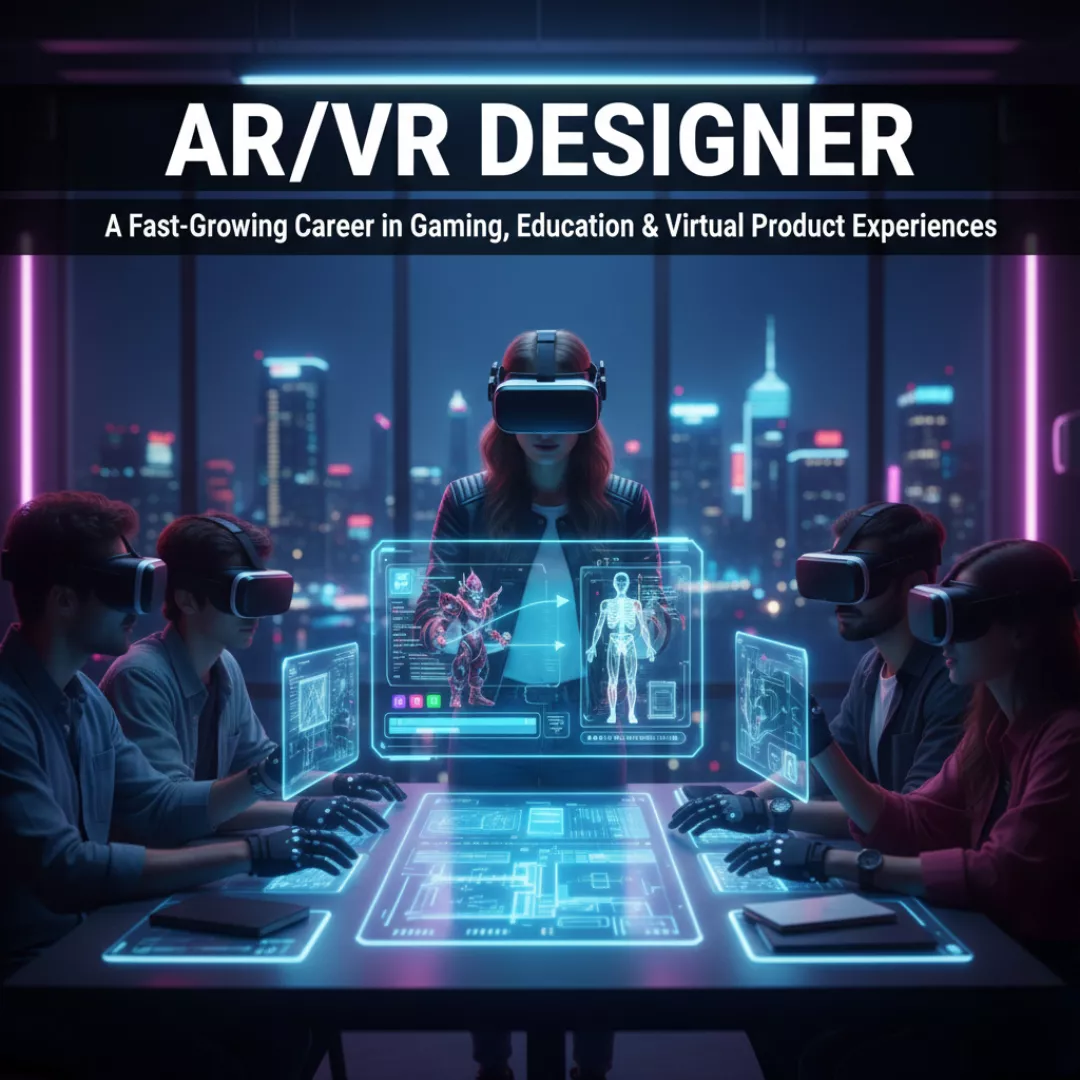
AR/VR Designer A Fast Growing Career in Gaming, Education & Virtual Product Experiences
The digital world is evolving rapidly, and Augmented Reality (AR) and Virtual Reality (VR) are at the center of this transformation. From immersive games and virtual classrooms to 3D product experiences and digital twins, AR/VR technology is reshaping how we interact with the world.
This has created a massive demand for AR/VR Designers professionals who design immersive digital environments, interactive 3D content, and unforgettable virtual experiences.
This complete guide covers everything roles, skills, salaries, tools, career path, job types, industries, and future scope.
What Is an AR/VR Designer?
An AR/VR Designer is a professional who creates interactive and immersive digital experiences using Augmented Reality (AR) and Virtual Reality (VR) technologies. These designers combine creativity, technology, and 3D design skills to build environments where users can interact with digital elements in a realistic way.
In simple terms, AR/VR designers design virtual worlds and interactive objects that people can explore through devices like VR headsets, smartphones, or AR glasses.
An AR/VR Designer creates interactive 3D experiences for AR (Augmented Reality) and VR (Virtual Reality) platforms. They design immersive environments, realistic objects, lifelike animations, and user interactions for :-
- Gaming
- Education
- E-commerce
- Training simulations
- Virtual tours
- Metaverse
- Digital product showcases
AR/VR Designers combine 3D art, UI/UX, storytelling, animation, and technology to bring virtual worlds to life.
What Does an AR/VR Designer Do?
An AR/VR designer is responsible for designing immersive environments and interactive content. Their work usually includes:
- Designing 3D environments and virtual worlds
- Creating realistic objects, characters, and animations
- Planning user interactions and navigation
- Working with developers to integrate designs into AR/VR applications
- Testing experiences to ensure they are smooth, engaging, and user friendly
These designers must think about how users will move, look around, and interact in a 3D space, which is very different from traditional web or app design.
Why AR/VR Careers Are Growing in 2026
1. Metaverse & Spatial Computing Boom
Companies like Meta, Apple (Vision Pro), and Google are investing heavily in immersive technologies.
2. Growth in Gaming Industry
AR/VR gaming is exploding worldwide demand for creative designers is rising.
3. Remote Work & Virtual Collaboration
Virtual meetings, 3D virtual offices, and training simulations are becoming common.
4. Adoption in Education
Schools and universities are integrating AR/VR for interactive learning.
5. Virtual Product Experiences
Brands now use AR to let customers “try out” products digitally cars, clothes, furniture, electronics, etc.
6. Enterprise Training
Industries like healthcare, aviation, and manufacturing use VR simulations for training.
Key Responsibilities of an AR/VR Designer
1. Creating 3D Models & Assets
- Characters
- Objects
- Environments
- Props
- Product models
Using tools like Blender, Maya, Cinema4D.
2. Designing User Interactions
- Hand tracking
- Voice commands
- Controller inputs
- Gesture interaction
3. Building Immersive Environments
- Realistic lighting
- Textures
- Visual effects
- Sound design integration
4. UI/UX for AR/VR
- Designing spatial interfaces
- Navigation flows
- User-friendly HUDs (heads up displays)
5. Storyboarding
Creating narrative flows and experience maps.
6. Prototyping Experiences
Using Unity or Unreal Engine to create interactive
mock-ups.
7. Testing Experiences
- User behavior testing
- Comfort optimization
- Reducing motion sickness
8. Working With Developers
Collaborating with AR/VR engineers to integrate
designs into applications.
Skills Required to Become an AR/VR Designer
Technical Skills
1. 3D Design & Modeling
- Blender
- Maya
- 3ds Max
- Cinema 4D
2. Game Engines
- Unity
- Unreal Engine
Designers use these engines to build interactive AR/VR environments.
3. AR/VR Development Basics
- ARKit (iOS)
- ARCore (Android)
- Meta Quest SDK
- Apple Vision Pro SDK
- WebXR
4. UI/UX Design
- Wireframing
- Visual hierarchy
- Interaction design
- Usability testing
5. Texture & Lighting
Realism in 3D depends on good materials and lighting.
6. Animation Basics
- Character movements
- Object interaction
- Physics based animations
7. Programming Basics (Optional but Valuable)
- C# (Unity)
- Blueprint (Unreal Engine) Coding helps
- designers
- understand implementation.
Soft Skills
- Creativity
- Storytelling
- Spatial awareness
- Problem solving
- Collaboration
- Communication
Industries Hiring AR/VR Designers
1. Gaming
AAA studios and small indie game companies.
2. E-commerce
Try before you buy AR product experiences.
3. Education
Interactive virtual classrooms and science simulations.
4. Healthcare
Medical training, surgical simulations.
5. Real Estate
Virtual tours and 3D walkthroughs.
6. Automotive
3D vehicle configurators.
7. Manufacturing
VR-based safety training.
8. Tourism
Virtual museum tours, cultural AR experiences.
9. Entertainment
Live virtual concerts, metaverse events.
10. Architecture
3D building visualization in VR.
Job Roles in AR/VR Design (2026)
1. AR/VR Designer
Generalist role creating assets and interactions.
2. XR Designer (Extended Reality)
Works on AR, VR & MR (mixed reality).
3. 3D Artist for AR/VR
Creates 3D models, environments, and props.
4. AR/VR UI/UX Designer
Designs user flows, interaction patterns, and spatial interfaces.
5. Motion Graphics Designer
Creates animations, VFX, and transitions.
6. AR Filter & Lens Creator
Creates Instagram, TikTok, Snapchat AR filters.
7. VR Interaction Designer
Focuses on designing gestures, haptics & immersive interactions.
8. VR Storyboard Artist
Creates narrative flows and user journeys.
9. Technical Artist
Blends design with technical pipeline expertise.
10. Metaverse Experience Designer
Builds 3D worlds for virtual metaverse platforms.
Salary of AR/VR Designers in 2026 (India & Global)
India
| Experience | Salary Range |
|---|---|
| Fresher | ₹3 – ₹7 LPA |
| Mid-Level | ₹7 – ₹15 LPA |
| Senior Designer | ₹15 – ₹30 LPA |
| AR/VR Specialist | ₹20 – ₹40 LPA |
| Metaverse Designer | ₹25 – ₹50 LPA |
United States
$70,000 to $150,000
United Kingdom
£40,000 to £95,000
Canada
$60,000 to $120,000
Remote AR/VR Freelancing
- $20 to $120/hour
- Huge demand on platforms like Upwork, Fiverr, Toptal
Best Courses & Certifications for AR/VR Designers
Beginner Level
- Meta AR Developer Certificate
- Google ARCore Fundamentals
- Coursera: Intro to AR/VR
- Udemy AR/VR Basics
Intermediate Level
- Unity AR/VR Developer Pathway
- Unreal Engine VR Development
Advanced Level
- Unity Certified Expert
- XR Interaction Design Certification
- Apple Vision Pro Spatial Design Training
How to Become an AR/VR Designer (Step by Step Roadmap)
Step 1 Learn Graphic Design Basics
- Start with
- Photoshop
- Illustrator
- Figma
Step 2 Learn 3D Modeling
Choose any
- Blender
- Maya
Build small models: chairs, tables, characters.
Step 3: Learn Unity or Unreal Engine
Unity → best for mobile & AR
Unreal → best for high-end VR visuals
Step 4: Learn AR SDKs
- ARCore
- ARKit
- Vuforia
- Meta Quest SDK
Step 5: Learn VR Concepts
- Spatial audio
- Haptics
- 3D interaction
Step 6: Build Mini Projects
Examples
- AR product viewer
- VR room walkthrough
- AR face filter
- VR game prototype
Step 7: Create a Portfolio
Showcase
- 3D assets
- Interactive demos
- Gameplay demos
- Videos of your AR/VR work
Step 8: Apply for Internships & Jobs
Start with
- AR/VR Designer Intern
- XR Creator
- Unity Designer
Step 9: Specialize
Choose a path
- Gaming
- Education
- Product AR
- Metaverse
- Training simulations
Future Scope of AR/VR Careers (2026 to 2035)
1. Spatial Computing Devices
Apple Vision Pro and similar devices will increase AR/VR job demand.
2. Metaverse Economy
More virtual worlds more designers needed.
3. AI + AR/VR Integration
AI-generated 3D assets accelerate development.
4. Virtual Workplaces
3D immersive office platforms will grow.
5. Digital Twins
Industries will create virtual replicas of real-world systems.
6. AR Smart Glasses
Future everyday devices will rely heavily on AR design.
Benefits of Becoming an AR/VR Designer
1. Creative & Innovative Field
Perfect for artists and tech minded creators.
2. High Global Demand
Worldwide shortage of skilled AR/VR designers.
3. Remote Work Opportunities
Most projects are digital first.
4. High Salary + Freelancing
Many designers earn well with freelance + full-time.
5. Opportunity to Shape the Future
You’re literally designing the future of digital interaction.
Challenges in AR/VR Design
1. High Learning Curve
Need expertise in both design + 3D technology.
2. Rapid Technology Changes
New devices and standards emerge frequently.
3. Performance Optimization
AR/VR requires powerful optimization for smooth experiences.
Conclusion
AR/VR Designers are at the forefront of a technological revolution. With gaming, education, retail, metaverse, and enterprise training booming, AR/VR design has become a high growth, high paying, and future proof career.
AR/VR designer plays a key role in shaping the future of digital interaction. By combining creativity with advanced technology, they create immersive experiences that feel realistic and engaging. As AR and VR technologies continue to grow, the demand for skilled AR/VR designers is expected to increase across multiple industries.
Whether you’re a creative artist, 3D designer, or tech enthusiast, AR/VR offers endless opportunities to build immersive worlds and transform digital experiences.